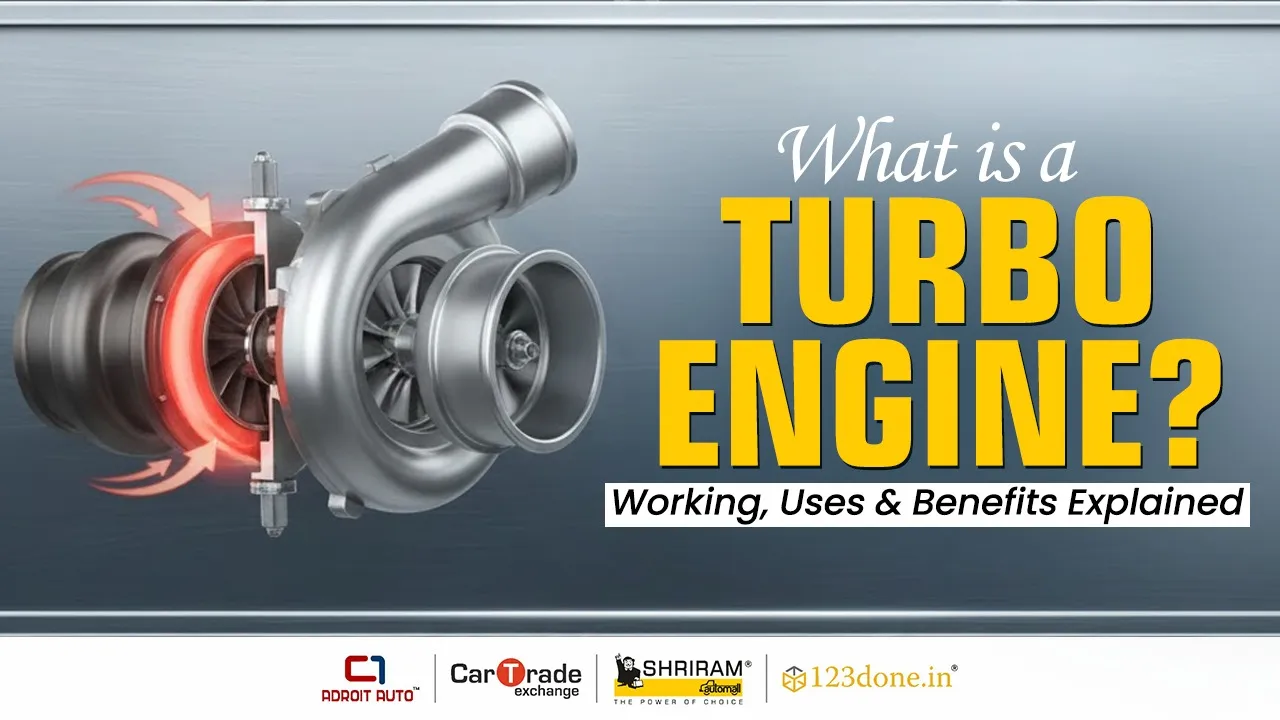
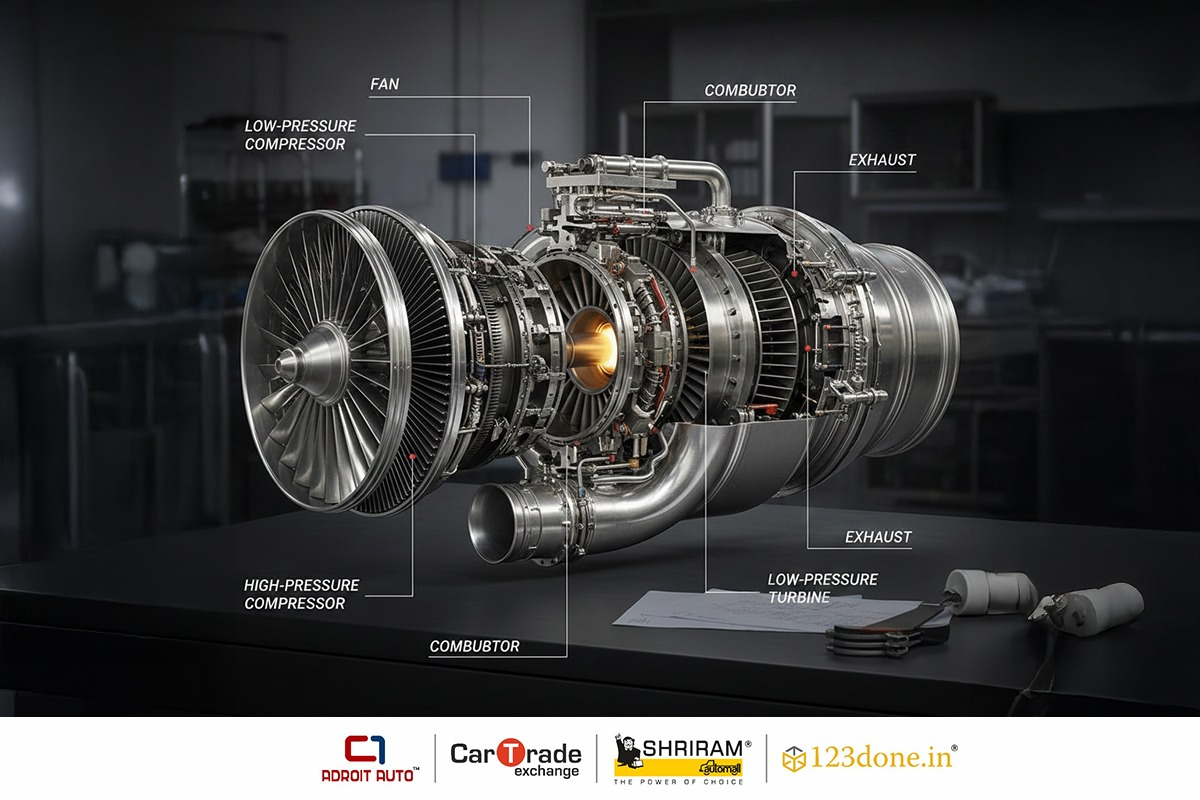
A turbo engine forces more air into the cylinders of the engine using a turbocharger. It burns more fuel to achieve higher power and efficiency. In the beginning, when a smaller engine produces power like a bigger one, it is a turbo engine. It works using exhaust gases to spin a turbine, which helps drive the compressor, compressing incoming air before it enters the engine. This blog will further reveal what a turbo engine is, its working, uses, and its benefits. To understand what a turbo engine is, you must first understand the working mechanism of a vehicle’s engine.
What is Turbo Engine?
Turbo engines are the ones that are designed to boost the vehicle’s performance without increasing the size of the engine or fuel consumption. This engine works by forcing more air into the engine for more power, better mileage potential, and lower emissions. In simpler words, turbo refers to the forced induction technology that delivers more power to any engine, and there is no need to even increase the engine size for the same.
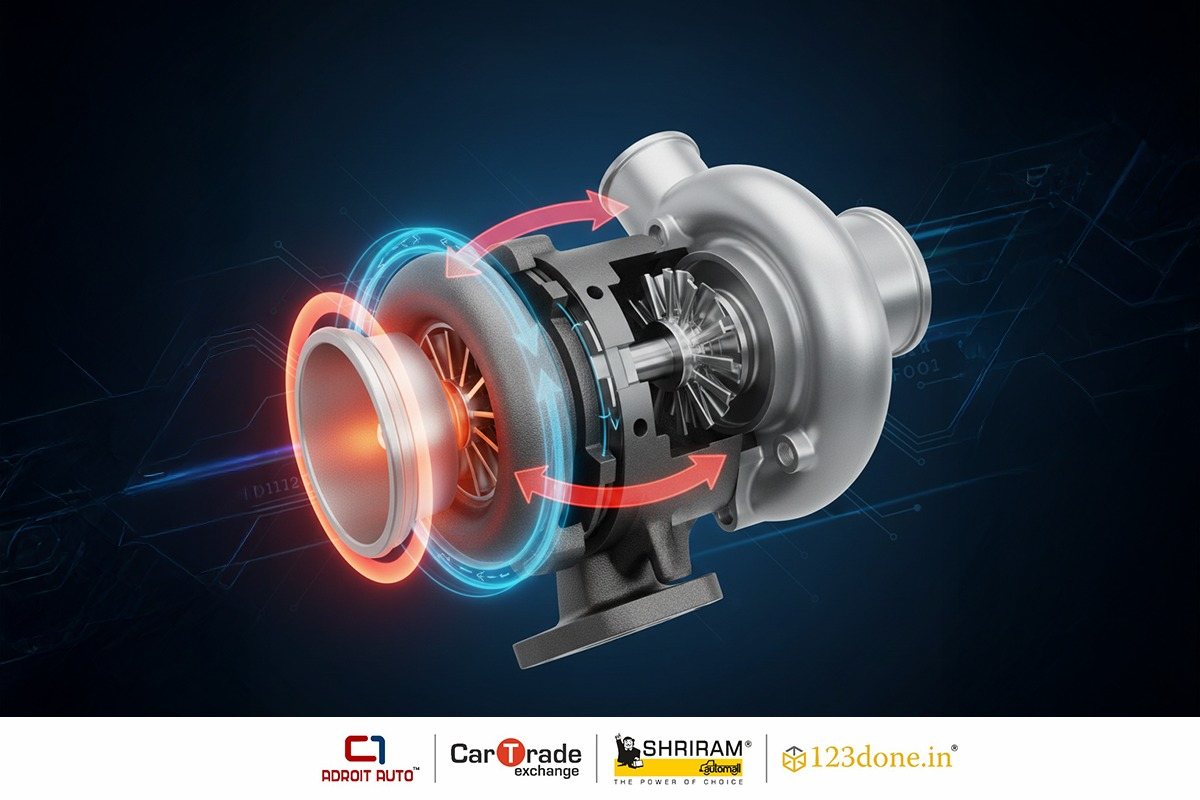
A turbo engine comprises a turbine wheel and a compressor wheel. Both of these are major components of a turbo engine. There is a shaft that holds the turbine and compressor wheel together. All the components in a turbo engine are enclosed in a snail-shaped housing with an inlet and an exhaust port.
The gases that are produced by the engine enter the inlet port at a great pressure. This high-pressure air spins the turbine, which simultaneously spins the compressor wheel. The spinning of the compressor wheel helps draw in a large volume of air through the air intake. Then, this compressed air goes into the cylinders through a pipe. This air is very hot and runs at a high speed.
How Does Turbo Engine Works?
A turbo engine works by smartly reusing what the engine would otherwise waste. Inside the turbo, a turbine and a compressor are connected by a single shaft and housed in a compact casing. When hot exhaust gases rush out of the engine, they spin the turbine, which automatically turns the compressor.
This compressor then packs more air into the engine’s cylinders, helping it burn fuel more efficiently and produce extra power without needing additional energy from the engine itself. Because this process involves intense heat and pressure, systems like intercoolers and oil cooling are used to keep temperatures in check. In modern cars, turbo setups are finely tuned and precisely controlled, delivering stronger performance while maintaining better efficiency.
Uses of a Turbo Engine
Vehicles with a turbo engine feature quick acceleration and thrilling power delivery. For the production of small and fuel-efficient engines with a powerful daily driving experience, turbo engines are preferred best. They are best for hill climbing and overtaking. Trucks and SUVs mainly have turbo engines for superior torque to haul heavy loads.
Benefits of a Turbo Engine
The turbo engine helps get more power to the vehicle, even with a small engine. This also provides efficient combustion, which saves fuel. The turbo engine delivers strong pulling power at lower RPMs, which means that the torque is improved. Vehicles with a turbo engine lead to lower emissions because of better fuel burn. Turbo engines are comparatively lighter than traditional engines as they are smaller in size.
Turbo Engine vs Normal Engine
As we now have a good understanding of a turbo engine, let us figure out how it differs from a normal engine. It will help you decide which vehicle you should choose:
|
Aspect
|
Turbocharged Engines
|
Naturally Aspirated Engines
|
|
Operating principle
|
Uses forced induction to push compressed air into the engine.
|
Draws air naturally based on atmospheric pressure.
|
|
Power output
|
Generates higher power even with a smaller engine size.
|
Delivers similar or lower power compared to turbo engines of smaller capacity.
|
|
Torque delivery
|
Offers stronger torque, especially at lower RPMs.
|
Produces comparatively lower torque.
|
|
Fuel efficiency
|
Can be more fuel-efficient due to smaller engine displacement.
|
Fuel efficiency may drop as larger engines are often required for similar output.
|
|
Reliability
|
Slightly less reliable due to added mechanical complexity.
|
Generally, more reliable because of its simpler construction.
|
|
Repair costs
|
Repairs tend to be more expensive.
|
Repair costs are usually lower.
|
|
Initial cost
|
Higher purchase cost.
|
More affordable upfront.
|
|
Maintenance needs
|
Requires additional care and regular turbocharger maintenance.
|
Needs routine maintenance with no extra components to manage.
|
Conclusion
Knowing what a turbo engine is and what is its working has become very important in modern cars. A turbo engine is charged through a turbocharger and uses exhaust gases to force more air into the cylinders. This allows smaller engines to produce higher power and improved fuel efficiency. Turbo engines are used for smooth city driving, quick overtakes, heavy-load hauling, and hill climbing. In comparison to a traditional engine, the turbo engine stands out as it delivers strong performance while also offering better mileage potential. These engines, however, give out fewer emissions; they require a bit more care than a normal engine. Turbo engine’s compact design makes it futuristic, featuring the best balance between performance and efficiency.
Frequently Asked Questions (FAQs)
1. What is a turbo engine in cars?
A turbo engine in cars uses a turbocharger to push extra air into the engine cylinders. This helps the engine burn fuel more efficiently and produce more power without increasing the engine size.
2. How does a turbo engine work?
A turbo engine works by using exhaust gases to spin a turbine, which drives a compressor. The compressor forces more air into the engine, resulting in better power, torque, and fuel efficiency.
3. Is a turbo engine good for daily driving?
Yes, a turbo engine is suitable for daily driving as it offers smooth performance, better mileage potential, and strong acceleration, especially during overtaking and highway driving.
4. What are the benefits of a turbo engine?
The main benefits of a turbo engine include higher power from a smaller engine, improved fuel efficiency, better torque at lower RPMs, and reduced emissions compared to a normal engine.
 18001024141
 Download Our App