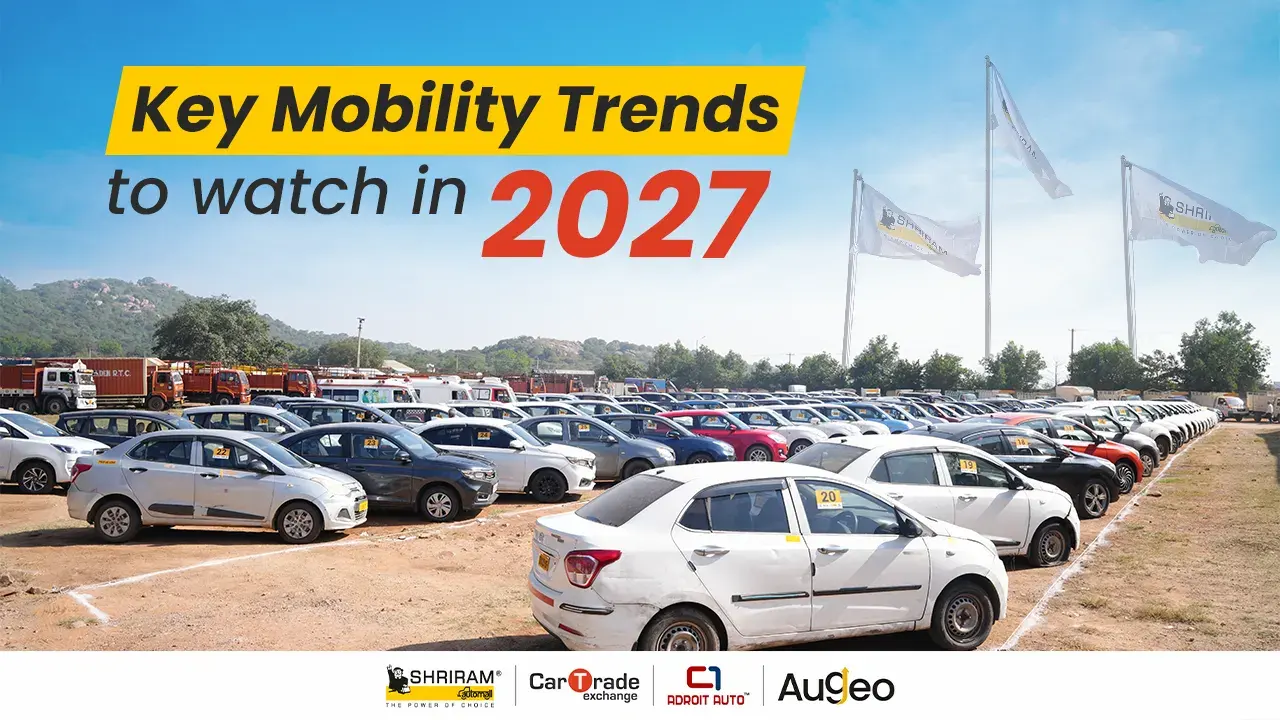
The mobility sector in India and globally is changing rapidly. There is an influx of electric vehicles, connected technologies, and sustainable transportation. The vehicle industry is undergoing a significant transformation, and there are key mobility trends to watch in 2027. As we approach the future, the sector is expected to see more development in electric mobility, intelligent transportation systems, vehicle ownership models, and digital vehicle marketplaces. If you understand these key mobility trends, it will bring you some emerging opportunities and prepare you for the future.
The changes extend beyond passenger cars to commercial vehicles, two-wheelers, public transportation, and logistics. Let us explore these trends with our focus on technology, consumer preferences, and industry developments that are shaping the future of transportation in India.
What is Mobility
Mobility is the movement of people and goods through different modes of transportation, such as cars, bikes, buses, and trucks. It is traditionally focused on vehicle ownership and transportation infrastructure. Mobility today includes digital platforms, shared transportation, electric vehicles, and connected mobility solutions.
The transformation of mobility in India is driven by growing urban populations and changing travel patterns, along with increasing interest in sustainable transportation. There is an expansion of vehicle technology and connectivity, driven by the rising demand for efficient logistics and commercial transportation.
Mobility Trends to Watch in 2027
There are several factors that will continue to influence the mobility industry in the year 2027, leading to a technology-driven, interconnected, and diverse sector.
Electric Vehicles
An important part of the global transition towards alternative technologies for transportation is electric vehicles (EVs). People are reducing their dependence on conventional fuels and moving towards sustainability. This is why electric two-wheelers, passenger cars, three-wheelers, and commercial vehicles are attracting buyers in India.
In 2027, we expect charging infrastructure to expand, battery technology to improve, and new vehicle models to be introduced.
Connected Cars
Smart mobility technologies like connected cars would gain a lot of attention. Connected mobility is changing how vehicles communicate with buyers. Modern vehicles incorporate technologies that support navigation, remote monitoring, driver assistance, and diagnostics.
In 2027, connected vehicles will become an important area of innovation across commercial transportation, as well as passenger vehicles.
Artificial Intelligence
Artificial intelligence (AI) analyses data, automates processes, and improves decision-making across the ecosystem. AI is an important technology used by vehicle manufacturers, transportation companies, fleet operators, and digital mobility platforms. The technology helps to analyse traffic patterns, road conditions, and route planning using historical data.
AI tools are used for vehicle inspection and valuation, but they should always be interpreted alongside physical inspections and personal evaluation.
Increased Digitalization
Increasing digital platforms are changing how people discover, evaluate, and purchase pre-owned vehicles. You can explore vehicle listings, compare prices, and review all available information online before making a purchase decision. Digital listings provide vehicle specifications and relevant information for making informed decisions.
There is an increase in digital auctions, as they can help sellers connect with a broader pool of potential buyers. Vehicle valuation is also becoming increasingly data-driven.
Mobility Infrastructure
The vehicle infrastructure that supports mobility is the future. Road networks, charging stations, public transportation systems, and digital infrastructure influence how effectively people and goods move. Enhancing the mobility infrastructure helps monitor road conditions and support traffic coordination.
Hence, the development of urban transportation systems and digital infrastructure is the future, along with smart traffic management.
Conclusion
The future of mobility is more connected, digital, electric, and will be driven by data. As 2027 approaches, these changes will influence how we buy, sell, own, and experience mobility. Smarter infrastructure opportunities, along with AI and digital marketplaces, are expanding in India. The key mobility trends to watch in 2027 include all the changes that are relevant to the industry and are slowly defining it. For businesses and consumers alike, understanding these mobility trends will be key to staying prepared for what lies ahead. The road to 2027 is already taking shape, and the future of mobility is set to be more accessible, intelligent, and sustainable.
Frequently Asked Questions (FAQs)
1. What are the key mobility trends to watch in 2027?
Key mobility trends in 2027 include electric vehicles, connected cars, artificial intelligence, digital vehicle marketplaces, and smarter mobility infrastructure.
2. How will electric vehicles shape mobility in 2027?
Electric vehicles are expected to become more accessible with improved battery technology, wider charging infrastructure, and increasing adoption across cars, two-wheelers, three-wheelers and commercial vehicles.
3. What role will AI play in the mobility sector?
AI will support smarter route planning, traffic management, vehicle inspection, valuation, fleet management and data-driven decision-making across the mobility ecosystem.
4. How is digitalisation changing the vehicle market?
Digitalisation is making it easier to discover, compare, value, buy and sell vehicles through online listings, digital auctions and data-driven vehicle marketplaces.
 18001024141
 Download Our App